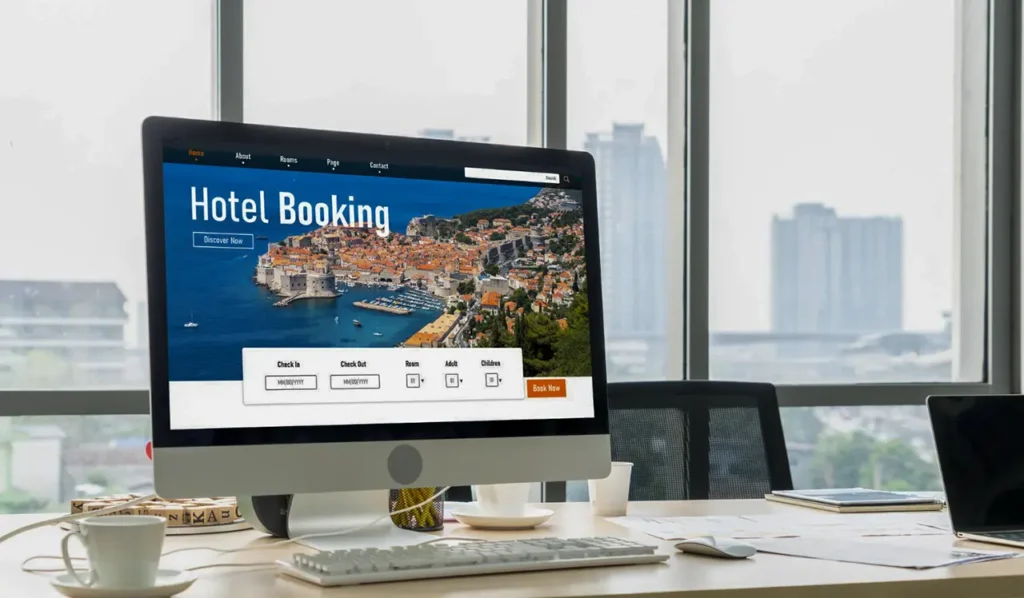
Hoteliers frequently ask a revealing question: “If I offer the exact same room, at the exact same price, under the exact same conditions on Booking.com and on my direct website, why should a guest book directly with me?”
The brutal operational truth: They won’t.
If your direct offer is identical to your OTA listing, you will lose the transaction almost every time. On Booking.com or Expedia, travelers already have saved credit cards, loyalty tier perks, familiar user interfaces, and frictionless booking flows. They trust the platform infrastructure. If you provide zero structural reason for them to change their behavior, expecting them to abandon a platform they are used to book on your site is wishful thinking.
Direct bookings do not happen by accident, nor do they happen out of charity. To win direct transactions, independent operators must stop playing by platform rules and break product parity entirely.
Standard Parity Strategy
OTA: Room A ($250) ◄── Identical Offer ──► Direct Website: Room A ($250)
Result: Guest chooses OTA (Frictionless UX + Saved Data + Loyalty Perks)
Product Un-Parity Strategy
OTA: Standard Room Only ($250) ──► Standard Template (Photos + Price Filter)
Direct Hub: Suite + Exclusive Inclusions ($280) ──► Full Identity + Unmatched Value
Result: Guest chooses Direct Channel (Unique Experience + High Perceived Value)
The Standardization Machine: How OTAs Flatten Your Identity
Third-party booking platforms are engineered for high-volume standardization. Every property—whether a 500-room corporate airport hotel or a 15-room bespoke design retreat—is forced into the exact same rigid template: room dimensions, bed count, standardized amenity checkboxes, and price per night.
When you list an independent property on an OTA, your unique architectural character, curated local gastronomy, and tailored guest service become invisible. The platform filter cannot measure atmosphere, privacy, or philosophy.
Consequently, the OTA forces you to compete on only two variables: high-resolution photos and price per night.
This brings us to a fundamental operational boundary: if your target guest is simply searching for “a clean bed to sleep in, take a shower, and drop off a suitcase,” an OTA works fine. But if your target guest is searching for an intentional, experience-driven stay, listing your property on OTAs actively degrades your market position. You are placing an uncomparable asset inside a bargain-hunting comparison grid.
If you operate a boutique property with a distinct vision, submitting to OTA standardization obscures the very attributes that justify your premium positioning.
Breaking Parity Without Slashing Margins
The common, flawed response from hoteliers attempting to drive direct traffic is offering a “10% direct discount promo code.”
This is margin erosion disguised as marketing. Slashing your rate by 10% to save a 20% commission fee yields negligible financial gain while conditioning your market to view your property as a discounted commodity.
To secure direct bookings, you must differentiate the product architecture itself, not beg for direct bookings with price cuts. What exists on an OTA must be structurally inferior to what is available on your direct website domain:
- Inventory Isolation: Reserve your premium suites, private garden wings, or unique architectural units exclusively for your direct website. Never place your flagship room inventory on third-party channels.
- Un-Replicable Bundled Inclusions: The direct channel booking should automatically include bespoke breakfast, flexible late check-outs, curated local tasting flights, or private transfers. The OTA listing must remain strictly room-only.
- Service Differentiation: Direct bookers gain priority access to dining reservations, spa slots, and tailored pre-arrival concierge planning. OTA bookers receive basic room access.
When the product on your website offers superior value and unique access, the guest is no longer comparing rates. They are choosing between a generic room and an exclusive experience.
The Math: Commission Tax vs. Proprietary Brand Equity
Hoteliers often treat a 20% OTA commission as an inevitable cost of doing business. It is not; it is a direct drain on your net operating income.
Consider a 20-room boutique hotel with an Average Daily Rate (ADR) of €300 operating at 70% occupancy. That property generates roughly €1.533.000 in room revenue annually. If 80% of those bookings come through OTAs at a 20% commission rate, the business hands over €245.280 every single year to third-party platforms.
| Operational Model | Annual Distribution Expense | Asset Generated |
| 80% OTA Dependency | ~€245.000 paid in commissions | $0 Brand Equity. Rented guest data that expires post-checkout. |
| Direct Inbound Strategy | ~€245.000 reinvested in marketing | Permanent owned digital asset, proprietary database, strong brand. |
What happens if you redirect that 20% margin back into your own business infrastructure?
When you pay 20% to Booking.com, you are buying temporary, non-repeatable traffic. The moment you stop paying, the volume disappears. When you invest that same 20% into targeted inbound marketing, authoritative destination content, and clean first-party data capture, you build a permanent corporate asset. You own the contact database, control the guest relationship, and dictate your pricing power.
The Proof: Abandoning OTAs to Secure 100% Direct Bookings
For independent properties operating between 10 and 30 rooms, total OTA independence is not a theoretical dream; it is an achievable operational strategy.
Look at the real-world execution of Mimi na Wewe. Founded in 2010 as a family-run boutique hotel, the property initially listed on Booking.com. Within just one season, management identified a severe operational breakdown: the standardized OTA template flattened the property’s rich, house-guest experience, driving price-sensitive travelers who complained about the lack of standardized resort amenities.
Management executed a radical operational shift: they closed the Booking.com account permanently.
Instead of compromising their identity to fit platform filters, they focused all resources on building an authoritative owned website. They produced deep destination content, answered logistical guest questions directly, and codified an intimate, highly personalized service model.
The financial validation of this strategy is absolute:
- Intermediation Percentage: 0% (100% direct bookings via the owned website hub).
- Guest Retention Rate: 25% repeat guest volume year after year.
- Market Recognition: Awarded the TripAdvisor Travellers’ Choice Best of the Best in 2016, 2020, and confirmed again in 2026 as the top boutique hotel in its territory.
If your property possesses a strong identity, a defined vision, and a specialized offering, you do not need third-party intermediaries to fill your rooms. You need the operational discipline to stop renting your audience and start building your own channel authority.
Executive Summary & Key Takeaways
- The Parity Rate Fallacy: Offering identical rates, room types, and terms on OTAs and direct websites guarantees transaction loss to OTAs due to lower user friction, stored payment data, and established platform trust.
- Product Differentiation Mandate: Direct booking success requires product un-parity. Hotels must reserve premium inventory, exclusive service access, and high-value bundled inclusions for their owned domain, rather than relying on margin-eroding discount codes.
- The Standardization Conflict: OTA templates flatten hotel identity into basic photo galleries and price-per-night variables, making third-party platforms structurally unsuited for 10-30 room boutique hotels with defined operational philosophies.
- Commission Reallocation Math: Redirecting a 20% OTA commission expense into proprietary inbound marketing and destination content builds a permanent brand asset and owned customer database, eliminating long-term platform dependency.
- The Target Audience Shift: Properties targeting guests seeking intentional, non-standardized hospitality must bypass OTAs entirely, as third-party search filters cater primarily to price-sensitive travelers seeking commoditized accommodations.