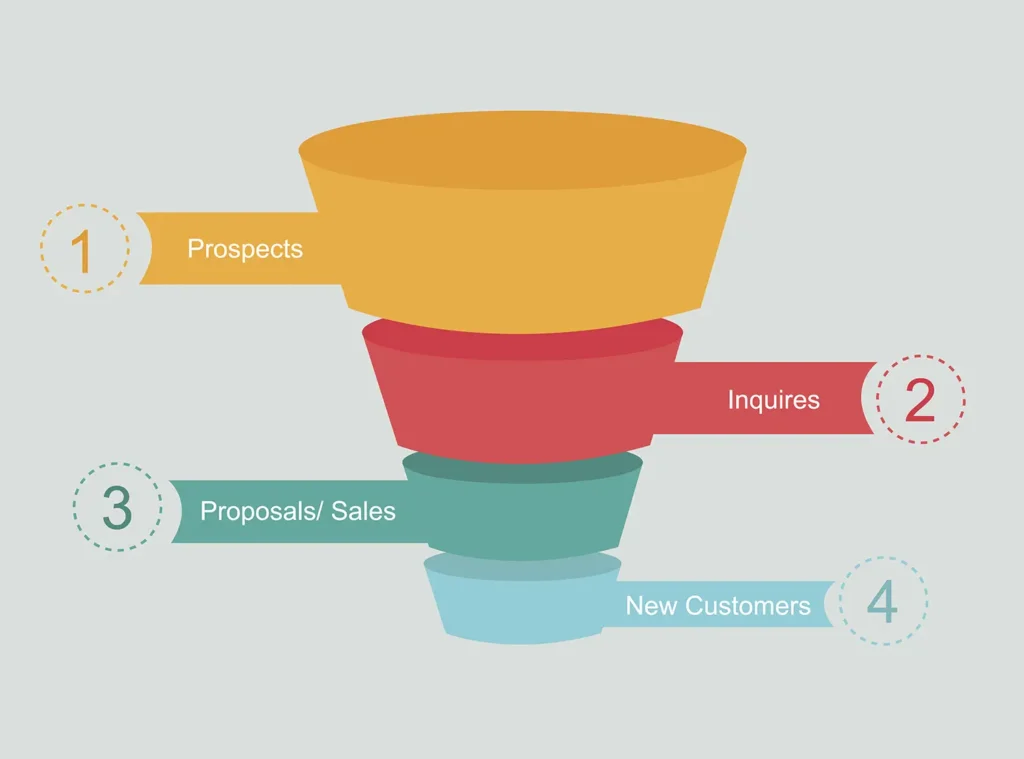
Occupancy and ADR are two of the numbers hotel owners look at most often. How many rooms did we sell? At what average rate? Are we ahead of last year? Are we performing well compared with similar properties?
They are useful numbers, but they don’t tell you everything you need to know about the commercial health of the hotel.
A hotel can have reasonable occupancy and a healthy ADR while still losing a significant amount of potential revenue somewhere between the first visit to the website and the final booking. The problem is that the money lost along the way doesn’t appear in either number.
You see the bookings you won. You don’t see all the bookings you could have won.
Your occupancy doesn’t show you the demand you lost
Imagine a boutique hotel with 10,000 visits to its website in a year.
That number may look encouraging. There is clearly interest in the property, people are finding it and some of them are taking the time to visit the website.
Now imagine that those 10,000 visits generate 500 enquiries and only 5 bookings.
The occupancy report doesn’t tell you anything particularly useful about that situation. It simply records the five bookings that happened. The other 495 enquiries don’t appear as lost bookings in the same way an empty room does. Neither do the thousands of visitors who never reached the enquiry stage. They simply disappear from the numbers.
That is where commercial leakage starts to become interesting.
More traffic may be the wrong answer
When a hotel has too few bookings, the natural reaction is often to look for more demand. More SEO. More advertising. More social media. More visibility. More traffic.
Sometimes that is exactly what the hotel needs. But if the problem is that the hotel already has people arriving on the website and isn’t convincing enough of them to continue, adding more traffic doesn’t solve the underlying problem. It simply puts more potential guests into the same funnel.
If 10,000 people visit your website and the site does a poor job of explaining why they should choose you, the answer isn’t necessarily to get 20,000 people to visit it. First you need to understand what is happening to the 10,000 you already have.
Your website has a job beyond looking good
A boutique hotel website has an obvious role: it needs to represent the property well.
Good photography matters. The design matters. The atmosphere matters. The website needs to make the hotel look like the kind of place someone would want to stay. But it also needs to help someone make a decision.
A potential guest needs to understand what kind of hotel you are, who the experience is for, what makes you different, what they can expect and why the price makes sense. If those things aren’t clear, the website may create interest without creating enough confidence to move the person towards a booking. This is particularly important for independent hotels because the property often doesn’t have the same brand recognition as a large international chain.
The guest needs to understand why this hotel.
If the answer isn’t obvious, people may continue browsing, compare you with another property or simply go back to the OTA where the comparison feels easier. The traffic was there. The commercial opportunity wasn’t converted.
Sometimes the problem is your positioning
This is one of the easiest leaks to mistake for a traffic problem.
A hotel can receive plenty of visitors while communicating very little that is distinctive. The website shows the rooms. It lists the facilities. It explains the location. It displays beautiful photographs. It might even have excellent reviews. But after spending several minutes on the site, the potential guest still doesn’t understand why this hotel is worth choosing over the five others they have just looked at.
That isn’t necessarily a design problem. It can be a positioning problem.
If the hotel has no clearly articulated reason to choose it, the website has very little to work with. It can make the property look attractive, but it can’t create a compelling commercial argument out of something the brand itself hasn’t defined.
This is one of the reasons a beautiful hotel website can still underperform. It may be communicating the hotel accurately without communicating its value particularly well.
Then there are the people who actually enquire
Let’s go back to the example of 500 enquiries and 5 bookings.
A hotelier might look at those numbers and conclude that the enquiries aren’t serious. Maybe. But before reaching that conclusion, you need to look at what happens after someone contacts the hotel.
How quickly do they receive a response? What does the response actually say? Does it answer the question and then stop, or does it help the guest understand why they should book? Does it communicate the value of the room? Does it reflect the personality of the hotel? Does it make the next step obvious? Does it give the guest confidence that they have found the right property?
Or does it simply look like this:
“Thank you for your enquiry. We have availability from 12 to 15 October. The total price is €1.240. Please let us know if you would like to proceed.”
There is nothing technically wrong with that email. It also does very little to sell the hotel. The guest has already shown intent. They have moved beyond browsing and taken the trouble to contact you. At that point, the response is part of the sales process, whether the hotel treats it that way or not.
A quotation can either close the sale or kill it
This is where small things can have a surprisingly large commercial effect.
If your brand is built around warmth, familiarity and personal attention, but the enquiry response reads like an automated invoice, there is a contradiction. The guest may have discovered a charming boutique hotel that appears personal and welcoming. They have sent a message expecting a conversation with the people behind the property. Instead they receive a cold template containing dates, prices and payment conditions.
The hotel hasn’t necessarily made a mistake in the traditional sense. But it has failed to deliver part of the experience it promised. That matters commercially because the guest is making a decision at exactly that moment.
The quote isn’t just information about what the stay costs. It is one of the last pieces of evidence the guest has before deciding whether the hotel is worth that cost.
If the communication weakens the value that the website created, the funnel has leaked.
This is also closely connected to the question of whether the experience a hotel intends to deliver is actually reaching the guest. We looked at that problem in Does Your Hotel Actually Deliver the Experience You Think It Does?, where the focus is on the gap between the intended experience and what the guest actually encounters.
The same thing can happen with your brand promise
The problem becomes even more obvious when the hotel has a strong positioning.
Imagine a property that presents itself as highly personal and attentive. The photography is intimate. The copy talks about genuine hospitality. The owners are visible on the website. The whole brand is built around the feeling that this is a place where guests are known rather than processed.
Then the guest sends an enquiry. The response arrives two days later from an anonymous address. It contains a generic template, a rate and a list of conditions. There is no reference to what the guest asked for and no indication that anyone has actually considered their particular stay.
The commercial problem is obvious. But it is also a branding problem. The hotel created an expectation and then contradicted it at the exact moment when the guest was deciding whether to buy.
That is the kind of leakage that won’t appear in occupancy, ADR or even a conventional website analytics report.
You may be measuring the wrong conversion
There is another problem with looking at hotel conversion too simply.
People often talk about website conversion as though the only meaningful outcome is a completed online booking. But boutique hotels don’t always work that way. A guest might discover the property through Google, visit the website, look at the rooms and then send an email because they have a question. Another might find you through Instagram and send a message. Someone else might call after reading the website.
Those are all commercial actions.
If the hotel measures only completed online bookings, it can miss what is happening in the rest of the buying journey. This doesn’t mean that every enquiry is valuable or that every visitor should become a lead. Some traffic will never be relevant. Some people are simply researching destinations. Some guests will compare ten hotels before making a decision.
The problem is when a meaningful amount of qualified demand is entering the funnel and the hotel has no idea why it isn’t progressing.
Your OTA can hide the problem
This is one of the reasons OTAs can make a hotel look healthier commercially than it actually is.
A guest may discover your property, become interested, compare options and eventually book through Booking.com. From the hotel’s perspective, the room is sold. Occupancy goes up. ADR is recorded. The reservation appears in the PMS. Everything looks fine. But the commercial journey was controlled by somebody else.
The guest may have visited your website and decided that booking there was less clear. They may have found the OTA easier to compare. They may have trusted the intermediary more. They may simply have returned to the platform they were already using.
The booking exists, but the hotel doesn’t necessarily own the entire commercial relationship that produced it. Direct booking isn’t automatically better in every circumstance, but when a hotel has already created demand and then repeatedly loses that demand to an intermediary, it is worth asking why.
The answer isn’t always a lower price. It may be that the hotel’s own channel is simply not doing enough to convert the interest it has already generated.
You can lose the booking without losing the guest
This is an important distinction.
A potential guest doesn’t have to disappear completely for the hotel to lose commercial value. They might book through an OTA. They might enquire but choose another hotel. They might decide that the property looks too expensive. They might like the hotel but not understand what makes it different. They might receive a quotation and never reply. They might receive a reply so generic that the emotional connection they had with the property disappears. All of these outcomes are different.
Treating them all as “we didn’t get the booking” doesn’t tell you what needs fixing. The hotel needs to understand where in the decision-making process the potential guest stopped moving forward and why.
That is a much more useful question than simply asking how many bookings were made.
This is why occupancy and ADR can be misleading
Occupancy and ADR are useful because they describe the outcome of the selling process. They don’t describe the entire selling process itself.
A hotel can have high occupancy because demand is strong. It can also have high occupancy because it discounts heavily. It can have a healthy ADR because its positioning supports a higher rate. It can also have a healthy ADR while missing opportunities to sell more rooms at that rate.
The numbers don’t tell you which situation you’re looking at. They also don’t tell you how many potential guests never understood the value of the hotel, how many enquiries weren’t converted, how many quotes failed to persuade or how much demand moved from your direct channel to an OTA.
Those are different questions, and if you want to improve commercial performance, those questions are often more useful than another comparison with last year’s occupancy.
Find the leak before you buy more traffic
Before spending more money to bring people to your hotel website, it is worth understanding what happens to the people who are already there.
If the positioning is unclear, more traffic won’t fix it. If the website doesn’t communicate value, more traffic won’t fix it. If the enquiry process is slow or generic, more traffic won’t fix it. If the quotation doesn’t sell the experience, more traffic won’t fix it. If the brand promises warmth but the sales communication feels cold, more traffic certainly won’t fix that.
You don’t necessarily have a demand problem. You may have a conversion problem. And a conversion problem is often much cheaper to diagnose than a demand problem is to compensate for.
The real question is not how many bookings you made
The more useful question is what happened to the demand that didn’t become bookings.
If 10,000 people visited your website, what prevented more of them from enquiring? If 500 people contacted you, what prevented more of them from booking? If guests regularly enquire but then disappear after receiving a quote, what is happening in that interaction? If people discover your hotel through your own channels but eventually book through an OTA, where did the direct journey break down?
These are commercial questions. They sit somewhere between branding, communication, website structure, sales and the guest’s perception of value and that is exactly why they are so easy to miss.
The hotel may have a good product. It may have good reviews. It may have healthy occupancy. It may have a perfectly respectable ADR. But if the journey from interest to booking is leaking value, the numbers at the end of the process won’t tell you where. They will only tell you what survived.
A Leakage Blueprint for boutique hotels is designed to find those leaks. It looks at the hotel’s positioning, website, messaging, direct booking journey, enquiry handling and commercial communication to understand where potential demand is being lost and why.
Because the objective isn’t simply to get more people to visit your website. It is to make better use of the people who are already trying to decide whether to book.