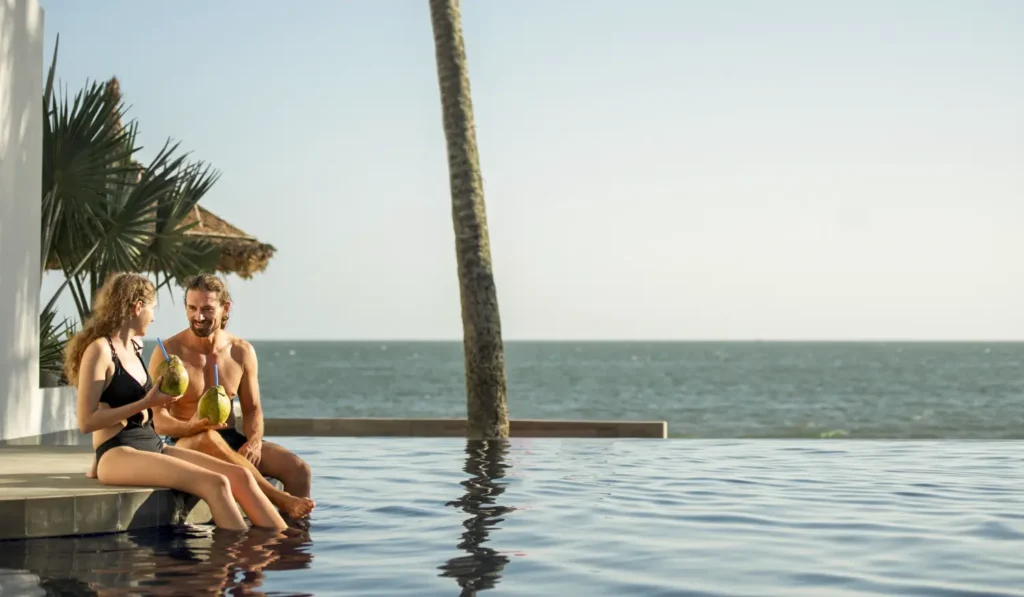
Most independent hoteliers operate under a dangerous assumption: to maximize occupancy, their structure must welcome everyone. They market themselves as a romantic escape for couples, a quiet retreat for remote executives, and an inviting destination for families all at once.
Trying to host every demographic is an operational failure.
Imagine a guest paying $450 a night for a quiet, high-end sanctuary in the Swedish countryside or a coastal hideaway in Cornwall. They arrive expecting total rest. Instead, their morning breakfast is disrupted by unsupervised children running past tables, putting unwashed hands directly into the open buffet, and shouting across the dining room while their parents scroll on smartphones, entirely indifferent to civil boundaries. In the afternoon, the swimming pool—intended as a quiet reading zone—becomes unusable due to chaotic splashing and noise.
The issue is rarely the children. The issue is irresponsible parenting combined with a management team that refuses to enforce operational boundaries.
A single out-of-control guest dynamic acts like a rotten apple in a barrel: it ruins the perceived value for every other paying guest in your room inventory. If your high-ticket guests leave with elevated stress levels instead of quiet satisfaction, your brand promise is broken, your review scores drop, and your guest retention rates collapse.
To protect your margins, you must learn to position your property by exclusion.
The Financial Power of “Quiet-Friendly” Positioning
The hospitality market is saturated with family-friendly resorts, pet-friendly boutique stays, and generic leisure options. Yet, hoteliers hesitate to label their properties as “adults-only” or “child-free,” fearing social media backlash or a drop in booking volume.
That fear is financially irrational. Positioning is not about pleasing everyone; it is about becoming the only logical choice for a specific buyer.
| Generic “All-Welcome” Property | Tranquility-First (Child-Free) Property |
| Competes on standard amenities and generic location features. | Commands a 20% to 30% rate premium for guaranteed quiet. |
| High operational friction from conflicting guest expectations. | Streamlined service flow with zero noise complaints. |
| Higher room wear-and-tear and frequent maintenance costs. | Lower operational degradation of physical assets. |
| Vulnerable to price-sensitive OTA comparison filters. | Captures intent-driven direct traffic seeking specific atmospheres. |
Travelers seeking a child-free environment—whether they are couples, solo travelers, or parents vacationing without their own children—are explicitly buying quiet, order, and privacy. They understand that true relaxation requires an environment free from disruption, and they will gladly pay a premium daily rate to secure it.
When you eliminate room noise and dining chaos, your property instantly justifies a higher Average Daily Rate (ADR). You stop selling mere square footage and start selling guaranteed peace of mind.
Operational Friction vs. Margin Retention
Beyond driving higher rates, an adults-only operational model drastically reduces internal business friction.
Independent boutique hotels have limited physical space. They do not possess separate wings, isolated children’s pools, or soundproof family dining quarters. When a 15-room hotel hosts even one disruptive family group, the physical layout ensures every guest feels the operational strain.
Unrestricted Targeting ──► Conflicting Guests ──► Noise Complaints & Negative Reviews
Targeting by Exclusion ──► Aligned Intent ──► High Perception of Value & Repeat Stays
Enforcing an adults-only policy delivers immediate operational benefits:
- Lower Maintenance Costs. Children accelerate the physical wear-and-tear of high-end furniture, delicate decor, soft furnishings, and poolside infrastructure.
- Optimized Staff Focus. Front-of-house staff can spend their energy delivering refined hospitality rather than mediating noise disputes or cleaning up avoidable dining messes.
- Predictable Guest Behavior. Adult guests follow established social norms, leading to a calm atmosphere at dining service, SPA facilities, and communal lounges.
Using Your Owned Website as an Automated Triage System
Third-party booking platforms are terrible at communicating atmospheric nuance. An OTA listing reduces your carefully designed sanctuary to a check-box grid of basic amenities, completely masking the quality of your guest environment.
Your direct website domain must act as an automated triage system. It should explicitly state your operational boundaries before a prospective guest ever opens a booking form.
Do not hide your adults-only policy in fine print on the check-out page. Make your tranquility-first positioning a core pillar of your brand identity:
- State the Policy Clearly. Frame the policy around your core commitment to rest and quiet. Explain that to preserve absolute peace for all guests, the property exclusively accommodates guests above a specific age threshold (e.g., 16 or 18 years old).
- Qualify the Lead Immediately. Honest, direct language filters out unqualified bookers early in the sales funnel. Those who demand a family vacation will book elsewhere, while those seeking silence will immediately recognize your property as their sanctuary.
- Build Unassailable Authority. By standing firm on a specific operational principle, you build deep credibility with high-ticket international travelers who value honesty over generic corporate fluff.
Repelling the wrong audience is the prerequisite for attracting the right one. Stop letting compromised guest experiences erode your brand reputation. Define your boundaries, protect your environment, and let your positioning drive your direct booking margins.
Executive Summary & Key Takeaways
- Positioning by Exclusion: Limiting guest demographics to an adults-only or tranquility-first framework removes market ambiguity, allowing independent properties to attract high-ticket guests seeking guaranteed quiet.
- Asset Protection (The Rotten Apple Rule): A single disruptive, unmonitored guest dynamic in a boutique hotel ruins the atmosphere for the entire room inventory, directly damaging review scores and guest retention rates.
- ADR Premium Potential: High-intent travelers seeking disconnection willingly pay a 20% to 30% premium on Average Daily Rates (ADR) for an environment that guarantees zero noise or family disruption.
- Operational Efficiency: Eliminating family multi-occupancy lowers room maintenance costs, reduces staff operational friction, and eliminates guest noise complaints.
- Automated Domain Triage: Using an owned website domain to clearly state operational constraints filters out unqualified leads before booking, protecting the property’s brand authority and driving direct, non-commissionable stays.